

What Happens When a Clinical Tradition Crosses an Educational Border?
Can a clinically grounded discipline such as Traditional Chinese Medicine be taught across jurisdictions without losing academic rigor or professional context? When I examine how universities build postgraduate partnerships, this question always surfaces first. The tension between expanding online postgraduate access in Hong Kong and maintaining the strict clinical, language, and institutional requirements of mainland TCM education is profound.
The initial planning committee debated whether to localize the entire curriculum in Hong Kong but decided to import the mainland academic framework intact to preserve clinical lineage. This decision created a unique cross-jurisdictional alignment between mainland degree standards and Hong Kong professional contexts. It required the integration of online postgraduate access with strict clinical and institutional requirements.
To understand how this works in practice, we look at a specific historical configuration. HKCyberU acted as the administrative and online learning support partner. Beijing University of Chinese Medicine (BUCM) served as the degree-granting institution. Meanwhile, PolyU-linked settings provided the physical infrastructure for examinations and clinical practice support.
Case Background: The Academic Partnership Behind the Programmes
The core programme area focused on postgraduate and professional education in Traditional Chinese Medicine, specifically targeting Acupuncture, Moxibustion, and Tuina. Administrators mapped the distinct strengths of each entity, assigning degree-granting authority to BUCM while routing local logistics through PolyU-linked settings. This blended delivery model specifically targeted working professionals requiring self-study pathways.
The broader partnership ecosystem required careful orchestration. BUCM held the academic mandate. HKCyberU provided the online learning support, managed programme administration, and served as the primary inquiry contact. PolyU and PolyU SPEED handled administrative, certificate, examination, and clinical-practice support contexts. Additionally, Peking University appeared as a named partner institution in specific Chinese Medicine programme records.
Institutional Roles in the Cross-Border TCM Partnership| Institution | Primary Role | Operational Contribution |
|---|---|---|
| Beijing University of Chinese Medicine (BUCM) | Academic Authority | Degree-granting institution, curriculum design, and specialist faculty |
| HKCyberU | Platform Operations | Online learning support, programme administration, and inquiry contact |
| PolyU / PolyU SPEED | Local Infrastructure | Examination venues, certificate administration, and clinical practice support |
The Challenge: Making TCM Credible, Accessible and Assessable at a Distance
TCM subjects such as diagnostics, internal medicine, acupuncture, moxibustion, and Tuina require applied reasoning. They cannot survive on content delivery alone. Course designers had to reconcile the asynchronous nature of online learning with the strict synchronous demands of clinical diagnostics and pulse-taking.
The cross-border constraint amplified this difficulty. The academic authority, specialist faculty, and clinical traditions were anchored in mainland institutions. Conversely, the learners were Hong Kong-based working professionals. Bridging this gap required strict language and professional-readiness dimensions. Programme materials mandated Cantonese and Putonghua instruction, while admissions criteria required specific HSK or Chinese-language capabilities.
Quick Tip: When designing cross-border admissions, align document submission windows with platform onboarding. In this model, document mailing deadlines estimated at 7 to 14 days of online intake ensured administrative compliance before academic access was granted.
The Solution Architecture: Dividing Academic Authority from Platform Operations
The partnership design functioned as a division of responsibilities rather than a single-provider model. The division of academic and operational authority varies heavily depending on whether the degree-granting institution has a physical branch campus in the host jurisdiction. Without a physical mainland campus in Hong Kong, the partnership architecture was formalized by strictly separating the academic credentialing from the digital platform maintenance.
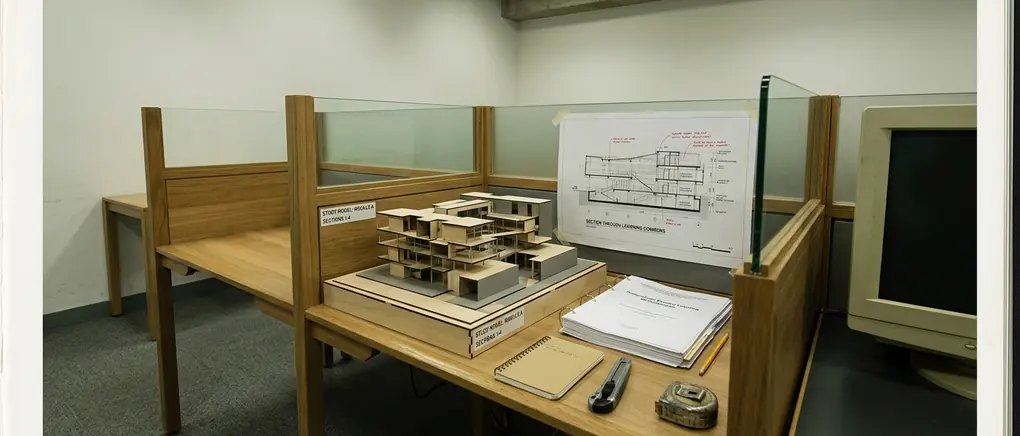
BUCM governed the Master of TCM and Professional Doctorate pathways. They controlled the syllabus, the grading rubrics, and the final degree conferral. HKCyberU managed the operational support. It functioned as the online learning platform provider, programme administrator, inquiry contact, and payee. Local execution at PolyU-linked locations grounded the theoretical online work in physical reality.
Curriculum Design: From Classical Texts to Clinical Specialisation
Curriculum developers integrated classical texts with modern biomedical foundations to ensure graduates could communicate across both traditional and Western medical paradigms. The curriculum breadth covered classical study of Shang Han Lun and Jin Gui Yao Lue alongside modern physiology and pathology. This dual approach aligns closely with global integration frameworks, such as those outlined in the WHO Traditional Medicine Strategy.
Specialist tracks defined the postgraduate experience. Modules included TCM internal medicine, pharmacology, pediatric massage, and integrated Chinese-Western medicine. The instruction of named techniques required concrete explanation and visual demonstration. Students learned moxibustion as thermal therapy and Tuina as Chinese massage therapy. Advanced modules covered balance acupuncture as a meridian-regulation system based on Huangdi Neijing principles, and three-point needle fixation techniques taught in orthopedic fracture-management modules.
Digital Delivery: Why the Portal, BBS and Maintenance Rules Matter
Online learning served as the primary delivery mode for these programmes, not a supplementary convenience. Platform environments hosted at big5.ibucm.com and gb.ibucm.com functioned as the main application and learning portals. Student-teacher interaction relied heavily on BBS and SAML/BBS protocols.
IT administrators established strict maintenance windows to ensure platform stability during peak weekend study hours for working professionals. System maintenance was scheduled for Tuesdays, recorded around 00:00-08:00. Technical requirements from the era—including Internet Explorer 5.5+, IE4 or above, and Flash, indicate the operational constraints the partnership had to navigate. Based on reported figures, a strict 7-working-day response window for academic and email inquiries maintained momentum for distance learners.
Note: The administrative procedures and platform specifications detailed in this historical case study reflect early-generation distance learning infrastructure and do not represent current admissions instructions or active clinical guidelines.
Assessment and Clinical Practice: The Safeguards Against a Content-Only Degree
Postgraduate TCM cannot rely only on passive online content. Clinical reasoning, technique, and professional judgement require physical verification. Failure to establish clear local examination venues resulted in unverified clinical competencies in early distance-learning models. To prevent this, academic boards mandated physical clinical hours to bridge the gap between theoretical online modules and applied patient care.
Concrete assessment mechanisms enforced academic rigor. Entrance examinations covered English and University Chinese. Certain modules utilized continuous assessment set at 100%, according to available data. Examinations were scheduled every 3 months or in specific months such as May and October.
Clinical practice requirements were non-negotiable. One pathway required a clinical practice component observed at approximately 100 hours at Zhejiang University of TCM for CATCM. Another curriculum record mandated a 15-credit final-semester clinical practice component. These physical requirements ensured that distance learning did not dilute clinical capability.
Results: What the Partnership Model Made Operationally Possible
Field reporting confirms that the operational framework allowed the institutions to synchronize their academic calendars, aligning mainland commencement dates with Hong Kong intake periods. We frame these results as operational and educational architecture outcomes, focusing on structural success rather than unverified claims about employment or clinical effectiveness.
Based on reported figures, operational metrics indicate clear progression timelines. Master's degree pathways spanned 3 to 5 years. Doctoral pathways required 6 to 9 years for completion. Intake months were structured around March, June, and September.
The primary achievement was access. Hong Kong working professionals could study through online self-study while still engaging with structured examinations, inquiry procedures, and clinical requirements. The partnership proved that a highly clinical, traditional discipline could cross educational borders when academic authority and operational support are properly divided and rigorously maintained.
Summary: Cross-border clinical education succeeds when institutions separate degree-granting authority from platform operations, enforce strict physical clinical hours, and synchronize their academic calendars to support working professionals.






Comments
No comments yet.
Share Your Opinion