
Academic Team for Postgraduate Digital Education Expertise
The researchers and practitioners who shape, review, and stand behind the postgraduate education content published on HKCyberU.
Academic remit and editorial responsibility
Every piece on this site passes through people who teach, research, or coordinate postgraduate work for a living. That is the simple test we apply: if an author has not worked the material in a classroom, a framework, or a partnership negotiation, they do not write about it here.
Our remit covers postgraduate programmes, knowledge management, technology management, and the blended online learning designs that connect them. Editorial responsibility sits with named individuals, not a faceless desk. When a claim about learning theory or adoption frameworks appears, one of the people below has reviewed it against what they know from practice.
We hold a conservative line on evidence. Where a figure cannot be traced to a named, verifiable source, we make the point qualitatively instead. That choice costs us some rhetorical punch. It keeps the content honest.
Associate Professor of Digital Education
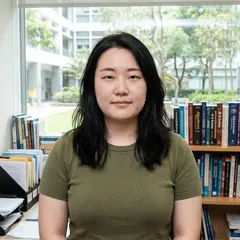
Dr. Park Seo-yeon
Associate Professor of Digital Education
I explain digital education from first principles, linking learning theory to institutional practice. My focus is on helping postgraduate students understand why blended systems work, not only how they are delivered.
Dr. Park anchors the theory side of our coverage. When a reader asks why a particular blended sequence improves retention, the answer she insists on starts with the learning science, then moves to the delivery model. That order matters. Articles that skip the reasoning tend to teach people what to copy without teaching them when copying will fail.
Senior Lecturer in Technology Management
Adoption rarely fails for technical reasons. It fails because an institution underestimates the human and procedural work around the tool. That observation drives the technology management coverage on this site.
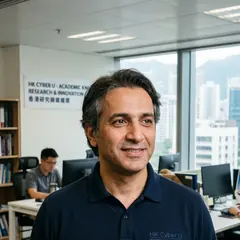
Dr. Rami Al-Khatib
Senior Lecturer in Technology Management
I examine how postgraduate learners and institutions manage technology adoption through evidence-led frameworks. My work connects Hong Kong higher education priorities with practical knowledge management and blended learning design.
Dr. Al-Khatib favours frameworks that survive contact with a real department. His comparisons between digital commerce software categories, for instance, weigh maintenance burden and staff training alongside headline features. The trade-off he returns to most often: a richer platform that nobody is funded to administer is worse than a plain one that runs itself.
Academic Partnerships Manager

Dr. Thabo Mokoena
Academic Partnerships Manager
I compare how universities build postgraduate partnerships across different systems and professional communities. My approach is conversational, practical, and focused on what Hong Kong stakeholders can learn from regional and international models.
Partnerships look similar on paper and behave very differently in practice. Dr. Mokoena's work draws out those differences, comparing how a joint research arrangement runs in one system against how a professional-community model runs in another. He coordinates our coverage of PolyU partnerships and academic conferences, where the value is usually in the convening structure rather than the formal agreement. What he leaves open, deliberately, is whether any single model transfers cleanly to Hong Kong without local adaptation.
How our academic team supports postgraduate readers
Postgraduate readers arrive with a specific problem more often than a general curiosity. Someone is choosing between two delivery models, scoping a knowledge management rollout, or deciding whether a partnership is worth the administrative cost.
We write for that reader. An article on blended learning explains the theory enough to justify a decision, then gives the practical detail to act on it. A comparison piece states its criteria up front so you can weigh them against your own constraints rather than ours.
The team also reviews each other's drafts across specialisms. Dr. Park flags where a technology argument has skipped the learning rationale; Dr. Al-Khatib flags where a theory piece ignores what implementation actually demands. That cross-check is the closest thing we have to a quality guarantee, and we treat it as routine rather than exceptional.
Scope, limitations, and content boundaries
This site covers postgraduate digital education with a Hong Kong focus and an international frame of reference. It is editorial and educational. It is not accreditation advice, and it does not stand in for an institution's own admissions, compliance, or programme regulations.
Our team's expertise concentrates in digital education, technology management, knowledge management, and academic partnerships. Where a topic sits outside those areas, we say so rather than stretching to cover it. Digital education also moves quickly, so a framework that reads as current today may need revisiting as platforms and regulations shift — treat dated examples as illustrations of method, not fixed recommendations.
For institutional background, see About HKCyberU. To reach the team directly, use Contact HKCyberU. How we handle your information is set out in our Privacy Policy.